How to Charge More Every Month for What You Already Sell
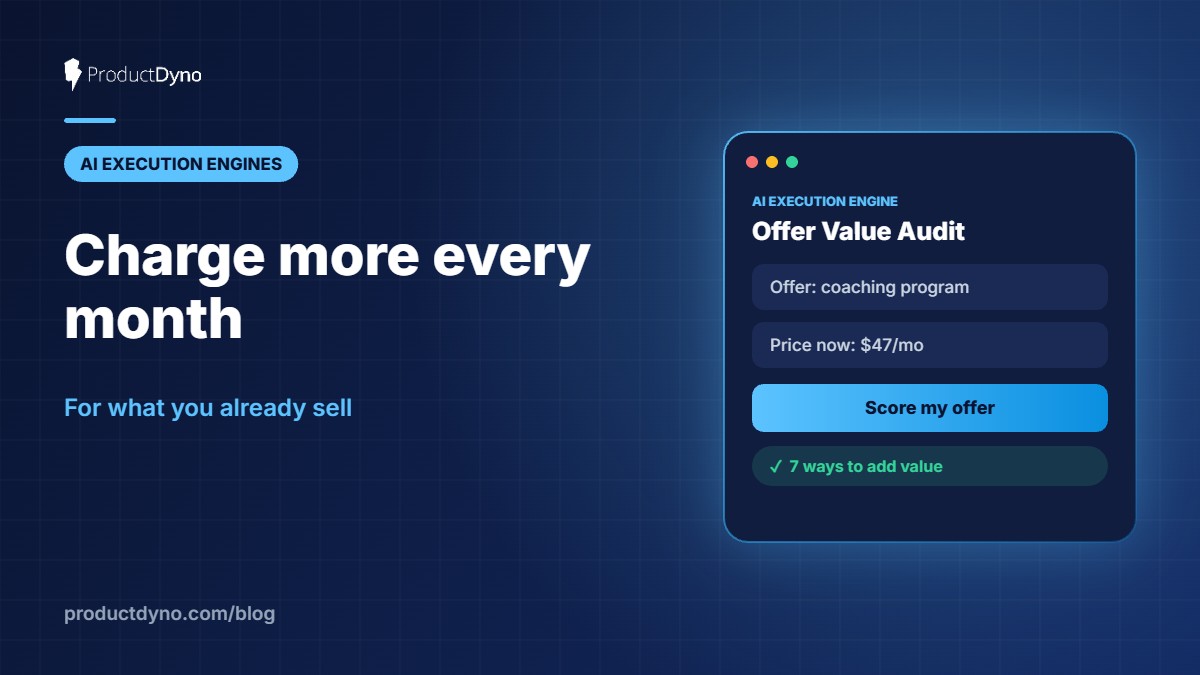
Two creators can sell the same know-how and one charges three times more every month. Raise perceived value with AI tools that hand each customer a finished result, an advanced level, better names, a community on your own platform and scalable access to you.
Two creators can sell the same know-how and one charges three times more, every month. The difference is perceived value: how valuable your offer looks and feels before and after someone buys. Raise it and you earn more from every customer, convert more visitors and keep people paying longer, without working more hours. It applies whether you sell a coaching program, a paid community, an AI tool or an agency service. Here are the six levers we’ve seen move it most.
1. Add AI tools that hand people a finished result
This is the biggest lever available today. The same information is valued very differently depending on how it’s delivered. From lowest to highest perceived value: text, audio, video, live group sessions, and one-to-one help.
AI tools now sit close to one-to-one help, but cost you almost nothing per customer. A fitness coach can go beyond a meal-plan guide with a tool that builds each client’s weekly plan around their schedule and preferences. A marketing agency can give clients a tool that drafts their weekly posts in their brand voice. People feel personally helped, and you aren’t spending your hours on it. See what an AI Execution Engine is and how it differs from a ChatGPT prompt.
Ask of every lesson or service you offer: what tool would make this faster, easier or cheaper for the customer? Calculators, planners, auditors, writers and checkers all count. Each one makes your offer more useful and more painful to cancel.
2. Serve intermediate and advanced buyers, not just beginners
Beginners are a hungry market, so most creators start there. Stopping there caps your income. Adding intermediate and advanced levels gives you a built-in buyer pool for the next level and lets you charge a premium, because advanced buyers usually have more to spend.
It also protects you from AI competition. Beginner basics are what free AI chats answer best. Advanced, situation-specific know-how is what they answer worst.
3. Change the labels
Words carry value. In 2027 a “PDF” can feel like something an AI wrote in a minute, and “chatbot” sounds like a support widget. Rename things for what they do:
- “Ebook” or “PDF” → Guide, Blueprint, Playbook or System.
- “Chatbot” → Coach, Planner, Builder or Assistant, named for the job it does.
- “Module 3” → a name that promises a result, such as “Your First 10 Clients Sprint.”
- “Bonus” → Toolkit or Resource Vault.
4. Package it as a course or program, not loose content
Structure adds value: a program is valued above a guide on the same topic, and a program with tools built in is valued above both. Turn each chapter of a guide into a module, pair each module with the tool that does that step, and you have a “done-with-you” program you can price well above the original guide.
5. Build a community on your own platform
When someone cancels an offer with an active community, they don’t just lose content. They lose people: answers at any hour, a place to show their expertise, and connections that lead to friendships and partnerships. That’s one of the strongest reasons people stay. (See our guide to keeping customers paying.)
Why not just a Facebook group?
- Some customers won’t use Facebook, or any social network.
- You don’t control the platform. Rules change, groups get removed, accounts get banned.
- It sends people away from your tools, when the goal is to bring them back every day.
Put the community next to your tools, so customers log in to take part. ProductDyno includes a built-in community where members talk to each other and you can moderate, with automatic translation so people who speak different languages can join the same conversation.
How to make the community active
- Post daily at first. As it grows, recruit active members as discussion leaders.
- Share material that exists only there: your best tips, quick demo videos and new tools first.
- Ask people to post their tool results. “Here’s the plan the tool built me” starts conversations and shows others what’s possible.
6. Offer access to you, on your terms
Live calls, Q&A sessions and occasional one-to-one reviews carry the highest perceived value of all. Offer them in a way that scales: group calls rather than private calls, a monthly “hot seat”, or one-to-one help only on your top tier. An AI assistant trained on your past answers can handle the routine questions between calls, so your live time goes to the questions that need you.
A quick perceived-value audit
- Do customers have at least one AI tool that gives them a finished, personal result?
- Is there a clear next level for people who finish your beginner material?
- Do any of your names still say “ebook”, “PDF”, “chatbot” or “Module 3”?
- Does every core lesson or service come with a tool, template or checklist?
- Is your community on your own platform and active today?
- Is there at least one scalable way for customers to get help from you?
Frequently asked questions
What is perceived value?
It’s how valuable your offer looks and feels to prospects and customers, not just how much it contains. It’s shaped by the level of the material, its format, how it’s named, the tools around it, the community and access to you.
Which format has the highest perceived value?
Roughly in rising order: text, audio, video, live group sessions and one-to-one help. AI tools that give each customer a personal, finished result sit close to one-to-one help, at a fraction of the cost to deliver.
Is a Facebook group good enough for a community?
It’s risky. You don’t control the platform, some customers won’t use it, and it pulls people away from your product. A community on your own platform keeps people logging in.
How can I raise my price?
Add AI tools, an advanced level, live access and an active community, and rename things for the result they deliver. Then raise the price for new customers first.
Put this into practice with a free AI engine
See your know-how turned into an AI tool your customers can use. Two engines, free, in five minutes.
Keep reading
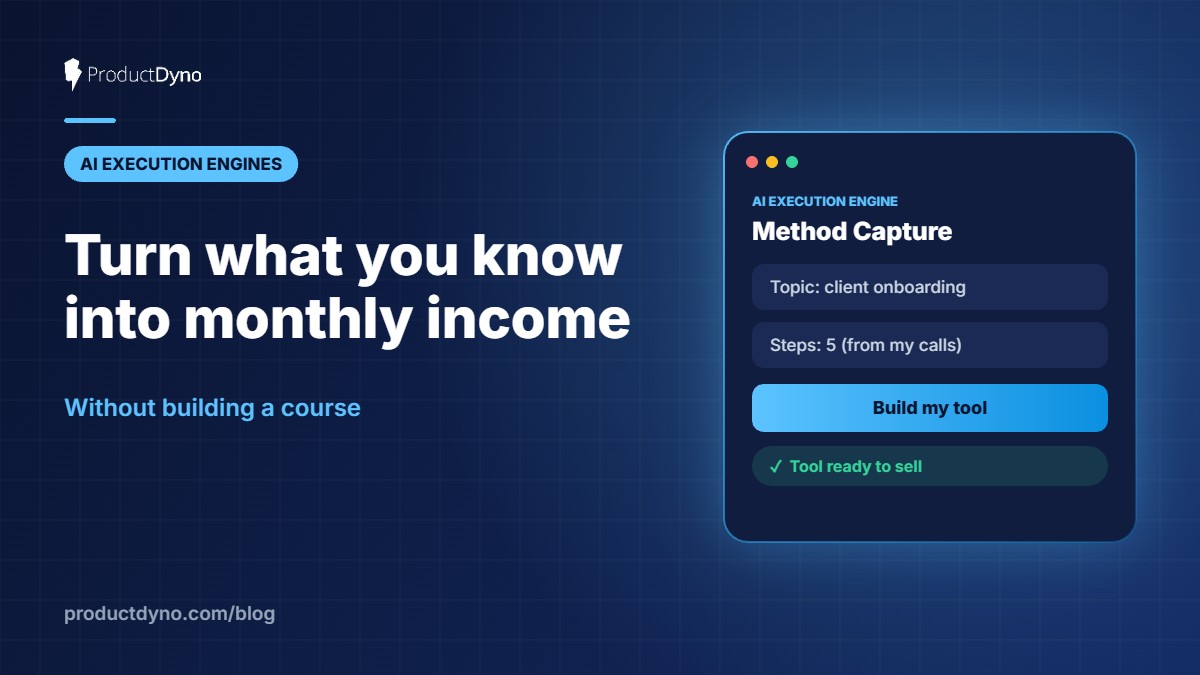 AI Execution Engines Turn What You Already Know Into Monthly Income (Without Building a Course)
You already have the hard part: know-how customers would pay for. In 2027 the fastest product to launch is an AI tool that applies your method…
Nov 19, 2026 · 4 min read
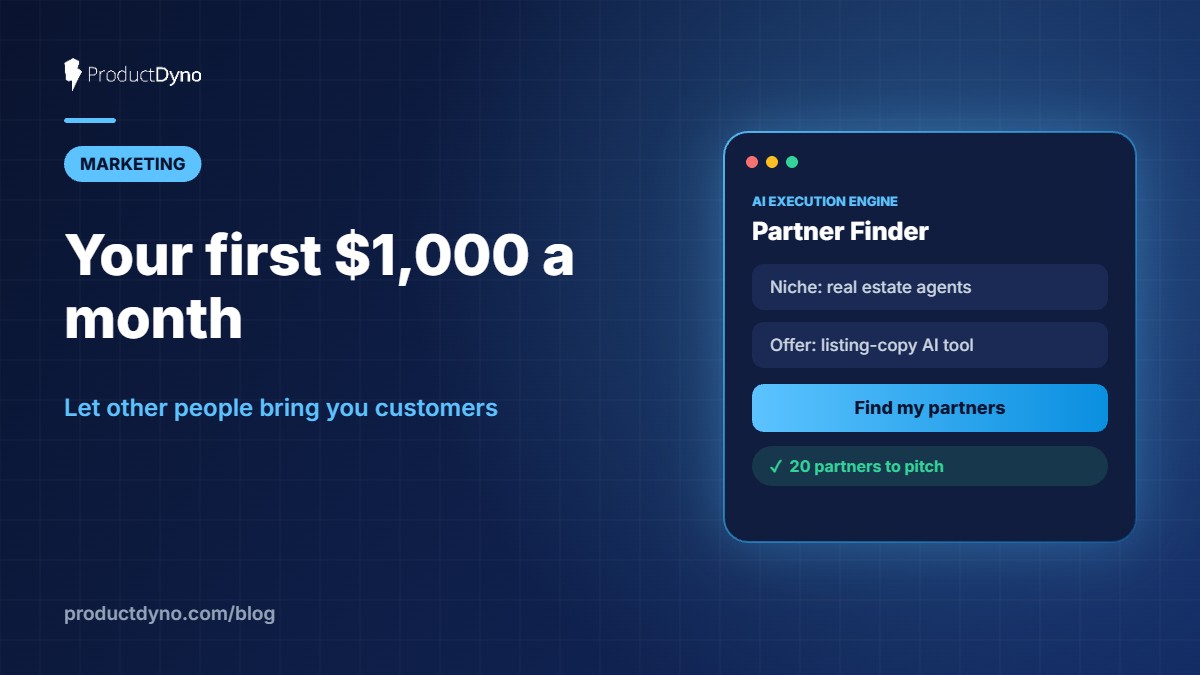 AI Execution Engines Your First $1,000 a Month: Let Other People Bring You Paying Customers
The first $1,000 a month in recurring income is the hardest. Instead of winning customers one at a time, recruit the people who already have their…
Nov 19, 2026 · 6 min read
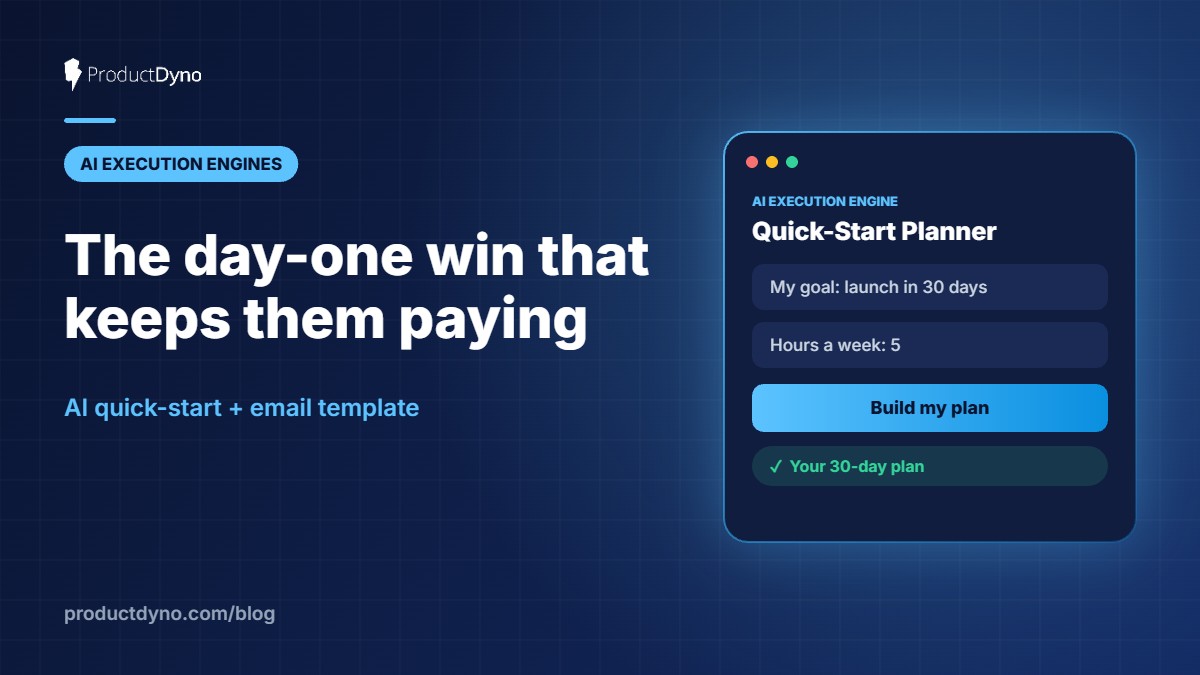 AI Execution Engines The Day-One Win That Keeps Customers Paying You Every Month (With Template)
The customers who pay you month after month are the ones who got a result in their first week. Make the first step an AI tool…
Nov 19, 2026 · 3 min read